 Add to Chrome
 Add to Firefox
 Add to Edge
service function chain
Papers and Code
Proactive SFC Provisioning with Forecast-Driven DRL in Data Centers
Jan 28, 2026
Service Function Chaining (SFC) requires efficient placement of Virtual Network Functions (VNFs) to satisfy diverse service requirements while maintaining high resource utilization in Data Centers (DCs). Conventional static resource allocation often leads to overprovisioning or underprovisioning due to the dynamic nature of traffic loads and application demands. To address this challenge, we propose a hybrid forecast-driven Deep reinforcement learning (DRL) framework that combines predictive intelligence with SFC provisioning. Specifically, we leverage DRL to generate datasets capturing DC resource utilization and service demands, which are then used to train deep learning forecasting models. Using Optuna-based hyperparameter optimization, the best-performing models, Spatio-Temporal Graph Neural Network, Temporal Graph Neural Network, and Long Short-Term Memory, are combined into an ensemble to enhance stability and accuracy. The ensemble predictions are integrated into the DC selection process, enabling proactive placement decisions that consider both current and future resource availability. Experimental results demonstrate that the proposed method not only sustains high acceptance ratios for resource-intensive services such as Cloud Gaming and VoIP but also significantly improves acceptance ratios for latency-critical categories such as Augmented Reality increases from 30% to 50%, while Industry 4.0 improves from 30% to 45%. Consequently, the prediction-based model achieves significantly lower E2E latencies of 20.5%, 23.8%, and 34.8% reductions for VoIP, Video Streaming, and Cloud Gaming, respectively. This strategy ensures more balanced resource allocation, and reduces contention.

Score-based Integrated Gradient for Root Cause Explanations of Outliers
Jan 29, 2026Identifying the root causes of outliers is a fundamental problem in causal inference and anomaly detection. Traditional approaches based on heuristics or counterfactual reasoning often struggle under uncertainty and high-dimensional dependencies. We introduce SIREN, a novel and scalable method that attributes the root causes of outliers by estimating the score functions of the data likelihood. Attribution is computed via integrated gradients that accumulate score contributions along paths from the outlier toward the normal data distribution. Our method satisfies three of the four classic Shapley value axioms - dummy, efficiency, and linearity - as well as an asymmetry axiom derived from the underlying causal structure. Unlike prior work, SIREN operates directly on the score function, enabling tractable and uncertainty-aware root cause attribution in nonlinear, high-dimensional, and heteroscedastic causal models. Extensive experiments on synthetic random graphs and real-world cloud service and supply chain datasets show that SIREN outperforms state-of-the-art baselines in both attribution accuracy and computational efficiency.
Structure-Aware NL-to-SQL for SFC Provisioning via AST-Masking Empowered Language Models
Jan 24, 2026Effective Service Function Chain (SFC) provisioning requires precise orchestration in dynamic and latency-sensitive networks. Reinforcement Learning (RL) improves adaptability but often ignores structured domain knowledge, which limits generalization and interpretability. Large Language Models (LLMs) address this gap by translating natural language (NL) specifications into executable Structured Query Language (SQL) commands for specification-driven SFC management. Conventional fine-tuning, however, can cause syntactic inconsistencies and produce inefficient queries. To overcome this, we introduce Abstract Syntax Tree (AST)-Masking, a structure-aware fine-tuning method that uses SQL ASTs to assign weights to key components and enforce syntax-aware learning without adding inference overhead. Experiments show that AST-Masking significantly improves SQL generation accuracy across multiple language models. FLAN-T5 reaches an Execution Accuracy (EA) of 99.6%, while Gemma achieves the largest absolute gain from 7.5% to 72.0%. These results confirm the effectiveness of structure-aware fine-tuning in ensuring syntactically correct and efficient SQL generation for interpretable SFC orchestration.
Beyond Max Tokens: Stealthy Resource Amplification via Tool Calling Chains in LLM Agents
Jan 16, 2026The agent-tool communication loop is a critical attack surface in modern Large Language Model (LLM) agents. Existing Denial-of-Service (DoS) attacks, primarily triggered via user prompts or injected retrieval-augmented generation (RAG) context, are ineffective for this new paradigm. They are fundamentally single-turn and often lack a task-oriented approach, making them conspicuous in goal-oriented workflows and unable to exploit the compounding costs of multi-turn agent-tool interactions. We introduce a stealthy, multi-turn economic DoS attack that operates at the tool layer under the guise of a correctly completed task. Our method adjusts text-visible fields and a template-governed return policy in a benign, Model Context Protocol (MCP)-compatible tool server, optimizing these edits with a Monte Carlo Tree Search (MCTS) optimizer. These adjustments leave function signatures unchanged and preserve the final payload, steering the agent into prolonged, verbose tool-calling sequences using text-only notices. This compounds costs across turns, escaping single-turn caps while keeping the final answer correct to evade validation. Across six LLMs on the ToolBench and BFCL benchmarks, our attack expands tasks into trajectories exceeding 60,000 tokens, inflates costs by up to 658x, and raises energy by 100-560x. It drives GPU KV cache occupancy from <1% to 35-74% and cuts co-running throughput by approximately 50%. Because the server remains protocol-compatible and task outcomes are correct, conventional checks fail. These results elevate the agent-tool interface to a first-class security frontier, demanding a paradigm shift from validating final answers to monitoring the economic and computational cost of the entire agentic process.
Serverless AI Security: Attack Surface Analysis and Runtime Protection Mechanisms for FaaS-Based Machine Learning
Jan 15, 2026Serverless computing has achieved widespread adoption, with over 70% of AWS organizations using serverless solutions [1]. Meanwhile, machine learning inference workloads increasingly migrate to Function-as-a-Service (FaaS) platforms for their scalability and cost-efficiency [2], [3], [4]. However, this convergence introduces critical security challenges, with recent reports showing a 220% increase in AI/ML vulnerabilities [5] and serverless computing's fragmented architecture raises new security concerns distinct from traditional cloud deployments [6], [7]. This paper presents the first comprehensive security analysis of machine learning workloads in serverless environments. We systematically characterize the attack surface across five categories: function-level vulnerabilities (cold start exploitation, dependency poisoning), model-specific threats (API-based extraction, adversarial inputs), infrastructure attacks (cross-function contamination, privilege escalation), supply chain risks (malicious layers, backdoored libraries), and IAM complexity (ephemeral nature, serverless functions). Through empirical assessments across AWS Lambda, Azure Functions, and Google Cloud Functions, we demonstrate real-world attack scenarios and quantify their security impact. We propose Serverless AI Shield (SAS), a multi-layered defense framework providing pre-deployment validation, runtime monitoring, and post-execution forensics. Our evaluation shows SAS achieves 94% detection rates while maintaining performance overhead below 9% for inference latency. We release an open-source security toolkit to enable practitioners to assess and harden their serverless AI deployments, advancing the field toward more resilient cloud-native machine learning systems.
Simultaneous Genetic Evolution of Neural Networks for Optimal SFC Embedding
Dec 10, 2025The reliance of organisations on computer networks is enabled by network programmability, which is typically achieved through Service Function Chaining. These chains virtualise network functions, link them, and programmatically embed them on networking infrastructure. Optimal embedding of Service Function Chains is an NP-hard problem, with three sub-problems, chain composition, virtual network function embedding, and link embedding, that have to be optimised simultaneously, rather than sequentially, for optimal results. Genetic Algorithms have been employed for this, but existing approaches either do not optimise all three sub-problems or do not optimise all three sub-problems simultaneously. We propose a Genetic Algorithm-based approach called GENESIS, which evolves three sine-function-activated Neural Networks, and funnels their output to a Gaussian distribution and an A* algorithm to optimise all three sub-problems simultaneously. We evaluate GENESIS on an emulator across 48 different data centre scenarios and compare its performance to two state-of-the-art Genetic Algorithms and one greedy algorithm. GENESIS produces an optimal solution for 100% of the scenarios, whereas the second-best method optimises only 71% of the scenarios. Moreover, GENESIS is the fastest among all Genetic Algorithms, averaging 15.84 minutes, compared to an average of 38.62 minutes for the second-best Genetic Algorithm.
An Adaptive Multi-Layered Honeynet Architecture for Threat Behavior Analysis via Deep Learning
Dec 08, 2025The escalating sophistication and variety of cyber threats have rendered static honeypots inadequate, necessitating adaptive, intelligence-driven deception. In this work, ADLAH is introduced: an Adaptive Deep Learning Anomaly Detection Honeynet designed to maximize high-fidelity threat intelligence while minimizing cost through autonomous orchestration of infrastructure. The principal contribution is offered as an end-to-end architectural blueprint and vision for an AI-driven deception platform. Feasibility is evidenced by a functional prototype of the central decision mechanism, in which a reinforcement learning (RL) agent determines, in real time, when sessions should be escalated from low-interaction sensor nodes to dynamically provisioned, high-interaction honeypots. Because sufficient live data were unavailable, field-scale validation is not claimed; instead, design trade-offs and limitations are detailed, and a rigorous roadmap toward empirical evaluation at scale is provided. Beyond selective escalation and anomaly detection, the architecture pursues automated extraction, clustering, and versioning of bot attack chains, a core capability motivated by the empirical observation that exposed services are dominated by automated traffic. Together, these elements delineate a practical path toward cost-efficient capture of high-value adversary behavior, systematic bot versioning, and the production of actionable threat intelligence.
OpenRASE: Service Function Chain Emulation
Jul 29, 2025Service Function Chains (SFCs) are one of the key enablers in providing programmable computer networks, paving the way for network autonomy. However, this also introduces new challenges, such as resource allocation and optimisation related to their operation, requiring new algorithms to address these challenges. Various tools have been used in the literature to evaluate these algorithms. However, these tools suffer from inaccuracy, low fidelity, unscalability, inflexibility, or additional code requirements. This paper introduces an emulator based on Mininet and Docker for SFCs called OpenRASE. The goal of OpenRASE is to enable the exploration of resource allocation algorithms for SFCs in a dynamic setting, allowing real CPU usage and latency to be measured. We describe the design and implementation of OpenRASE and discuss its characteristics. We also experimentally evaluate two different algorithms to address the SFC resource allocation challenge, including an online Genetic Algorithm, using OpenRASE to show its effectiveness and practicality for dynamic network conditions.
Bridging AI and Software Security: A Comparative Vulnerability Assessment of LLM Agent Deployment Paradigms
Jul 08, 2025Large Language Model (LLM) agents face security vulnerabilities spanning AI-specific and traditional software domains, yet current research addresses these separately. This study bridges this gap through comparative evaluation of Function Calling architecture and Model Context Protocol (MCP) deployment paradigms using a unified threat classification framework. We tested 3,250 attack scenarios across seven language models, evaluating simple, composed, and chained attacks targeting both AI-specific threats (prompt injection) and software vulnerabilities (JSON injection, denial-of-service). Function Calling showed higher overall attack success rates (73.5% vs 62.59% for MCP), with greater system-centric vulnerability while MCP exhibited increased LLM-centric exposure. Attack complexity dramatically amplified effectiveness, with chained attacks achieving 91-96% success rates. Counterintuitively, advanced reasoning models demonstrated higher exploitability despite better threat detection. Results demonstrate that architectural choices fundamentally reshape threat landscapes. This work establishes methodological foundations for cross-domain LLM agent security assessment and provides evidence-based guidance for secure deployment. Code and experimental materials are available at https: // github. com/ theconsciouslab-ai/llm-agent-security.
Transformer-Empowered Actor-Critic Reinforcement Learning for Sequence-Aware Service Function Chain Partitioning
Apr 26, 2025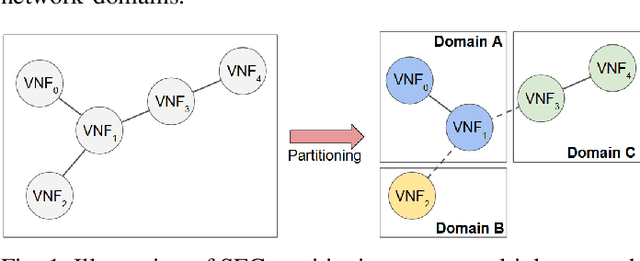
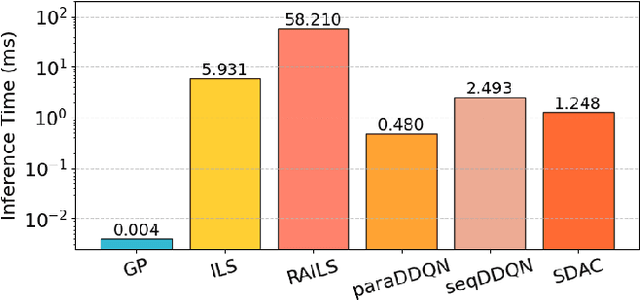
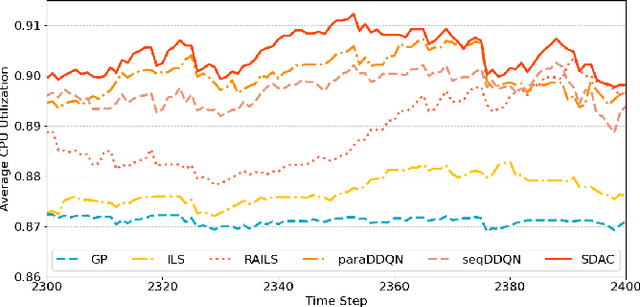
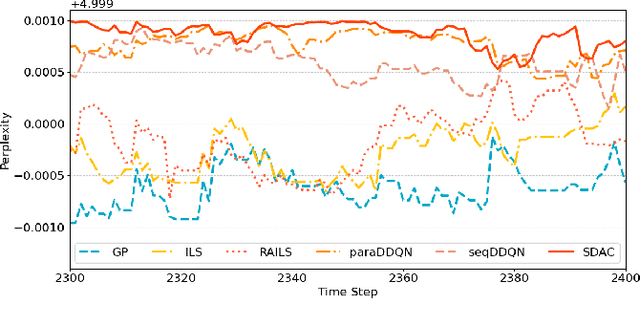
In the forthcoming era of 6G networks, characterized by unprecedented data rates, ultra-low latency, and extensive connectivity, effective management of Virtualized Network Functions (VNFs) is essential. VNFs are software-based counterparts of traditional hardware devices that facilitate flexible and scalable service provisioning. Service Function Chains (SFCs), structured as ordered sequences of VNFs, are pivotal in orchestrating complex network services. Nevertheless, partitioning SFCs across multi-domain network infrastructures presents substantial challenges due to stringent latency constraints and limited resource availability. Conventional optimization-based methods typically exhibit low scalability, whereas existing data-driven approaches often fail to adequately balance computational efficiency with the capability to effectively account for dependencies inherent in SFCs. To overcome these limitations, we introduce a Transformer-empowered actor-critic framework specifically designed for sequence-aware SFC partitioning. By utilizing the self-attention mechanism, our approach effectively models complex inter-dependencies among VNFs, facilitating coordinated and parallelized decision-making processes. Additionally, we enhance training stability and convergence using $\epsilon$-LoPe exploration strategy as well as Asymptotic Return Normalization. Comprehensive simulation results demonstrate that the proposed methodology outperforms existing state-of-the-art solutions in terms of long-term acceptance rates, resource utilization efficiency, and scalability, while achieving rapid inference. This study not only advances intelligent network orchestration by delivering a scalable and robust solution for SFC partitioning within emerging 6G environments, but also bridging recent advancements in Large Language Models (LLMs) with the optimization of next-generation networks.